What Is Utility Management?
Utilities affect your budget whether you pay attention or not. A hidden leak, an incorrect bill, or an outdated system can raise expenses every month.
That’s why many property owners ask, what is utility management?
Utility management explains how organizations organize, track, and improve the use of electricity, water, gas, and waste services. It helps you find issues early and stay compliant with utility and environmental standards.
This matters even more with water utility management, where toilets, showers, and sinks can waste gallons without anyone noticing.
This guide explains how organizations use data to improve utility performance.
TL;DR
Utility management is how organizations track and manage electricity, water, gas, and waste usage.
Effective utility management relies on accurate data, bill review, and maintenance.
Water utility management needs fixture-level data since building meters hide leaks.
DrizzleX delivers fixture-level water data, leak detection, and accurate tenant billing.
What Utilities Are Included in Utility Management?
Utility management refers to the oversight of the essential services that keep buildings and businesses operating. These affect utility bills, ongoing expenses, and how efficiently a property runs.
Here is what’s included in utility management:
Electricity and Energy Systems
Electricity powers lighting, elevators, security systems, and equipment throughout a building.
Energy management tracks energy usage to show when consumption peaks and which systems drive higher utility costs.
For example, lights or equipment running overnight often explain sudden increases in energy bills.
Water Management
Water management tracks water usage across apartments, common areas, and building systems.
Toilets, showers, sinks, laundry rooms, and irrigation fixtures account for most water consumption.
A single running toilet can waste hundreds of gallons per day, which makes water utility management a major factor in monthly expenses.
Natural Gas and Heating Systems
Natural gas fuels heating systems and water heaters in many properties. Tracking gas usage during colder months explains seasonal increases on utility bills and highlights inefficient HVAC operation.
Longer heating cycles usually signal higher gas consumption and higher costs.
Waste Management
Waste management includes trash collection, recycling services, and waste disposal fees. Costs depend on container size, pickup frequency, and contamination.
Reviewing these services helps property managers avoid paying for unused capacity and correct recycling issues that increase disposal charges.
Why Is Utility Management Important to Businesses and Facilities?
Once you know which utilities to manage, the next question is why utility management deserves ongoing attention.
For many organizations, it influences decisions outside monthly billing, from maintenance planning to long-term property value.
Here’s why utility management is important for businesses and facilities:
Support regulatory compliance: Many jurisdictions require detailed records for energy use, water consumption, and waste disposal. Utility management keeps documentation organized and ready for inspections or audits.
Improve planning and forecasting: Tracking utility usage patterns helps finance and operations teams forecast future expenses more accurately. This makes budgeting more predictable, especially for seasonal energy and water demand.
Maintain asset performance: Utilities connect directly to equipment like boilers, chillers, pumps, and HVAC systems. Monitoring usage highlights systems that strain equipment and shorten its lifespan.
Strengthen sustainability efforts: Organizations with sustainability initiatives need reliable utility data to track progress. Energy consumption and water usage data help demonstrate reductions and environmental responsibility.
Interest in utility management continues to grow. Cognitive Market Research projects the utility management systems market will reach $8.62 billion by 2033, driven by sustainability efforts and improved utility monitoring.
Key Components of Effective Utility Management
Utility management works through a set of repeatable actions that teams follow every month.
Property managers start by centralizing utility data. Usage records, utility bills, and utility account details stay in one system instead of spread across multiple providers.
Facilities managers then handle utility bill management. They review invoices, confirm rates, and schedule payments. This prevents late fees and flags billing issues before they inflate utility expenses.
Next, maintenance staff review utility consumption trends. Energy and water usage patterns show when HVAC systems run longer than expected or when water use spikes in specific areas.
Maintenance schedules follow actual system behavior rather than fixed calendars.
Finally, owners and asset managers use utility data for planning. Budget forecasts, equipment upgrades, and service contracts rely on documented usage trends.
This keeps utility expenses predictable and limits financial risk as demand changes.
How Utility Management Systems Work
Utility management systems support sustainable property management through centralized utility tracking.
They collect usage data from smart meters and other connected utility systems, then store that information in one place. This centralized data replaces manual checks that are time-consuming and often incomplete.
The system records real-time data for electricity, water, and gas so managers can monitor utility consumption as it happens.
When usage changes unexpectedly, the data highlights where consumption increases and helps identify inefficiencies without inspecting every system on site.
HVAC optimization often starts here, since heating and cooling systems account for a large share of energy use.
Utility management systems also simplify paying utility bills. Invoices align with recorded usage, which improves expense management and reduces billing errors.
This helps lower costs and avoids overpayments tied to inaccurate charges.
How to Implement a Utility Management Strategy
A utility management strategy works when it replaces assumptions with repeatable actions.
Instead of reacting to rising utility expenses or sudden failures, property and facilities managers follow a process that connects data, decisions, and follow-up.
Step 1: Evaluate Utility Systems and Establish a Baseline
Start by reviewing how utilities perform today. Pull at least 12 months of utility bills and usage records to understand normal energy consumption, water usage, and seasonal swings.
Pair that data with on-site inspections of HVAC equipment, plumbing fixtures, and waste areas. For example, comparing winter gas use year after year can reveal heating systems that run longer than expected.
A clear baseline gives you something concrete to measure against when costs change.
Step 2: Set Measurable Utility Management Goals
Goals should connect directly to spending and usage, not broad intentions. A property might aim to lower summer electricity demand, reduce water use in laundry rooms, or cap waste hauling costs.
These targets help prioritize work and avoid spending time on changes that won’t affect utility management expenses.
Step 3: Monitor Utility Performance Continuously
Continuous monitoring replaces monthly bill reviews with ongoing insight. Smart meters and connected sensors track usage throughout the day and highlight when consumption shifts.
For instance, data may show HVAC systems running during unoccupied hours or water use increasing overnight. Catching these changes early helps reduce costs before they compound.
Step 4: Build Awareness and Accountability
Utility management works better when people understand how their actions affect usage. Train maintenance staff on system settings and encourage tenants to report leaks quickly.
Sharing basic usage feedback, such as water use per unit, often leads to fewer repeat issues and less waste.
Step 5: Modernize and Optimize Systems
Outdated equipment often drives higher utility expenses. Replacing inefficient fixtures, upgrading HVAC controls, or installing better insulation can lower ongoing costs every year.
These updates also support water conservation and reduce environmental impact from energy use.
Why Water Utility Management Needs Closer Tracking
Water utility management requires closer tracking since water use happens at individual fixtures, not just at the building level.
A single main meter only reports total consumption. It doesn’t explain which toilet runs continuously, which shower cycles too often, or where water loss starts.
Without that detail, unnecessary costs add up, and repairs take longer than needed.
Granular monitoring changes how properties handle water. Fixture-level data shows exactly where water use exceeds normal ranges and how often it occurs.
Instead of inspecting multiple units, property managers can focus on the specific fixture that causes the increase.
Detailed water data also helps reduce water waste. Silent leaks can waste thousands of gallons while remaining unnoticed.
Early detection lowers water bills and prevents damage that affects the building's structure.
Improve Water Accountability Across Your Property With DrizzleX
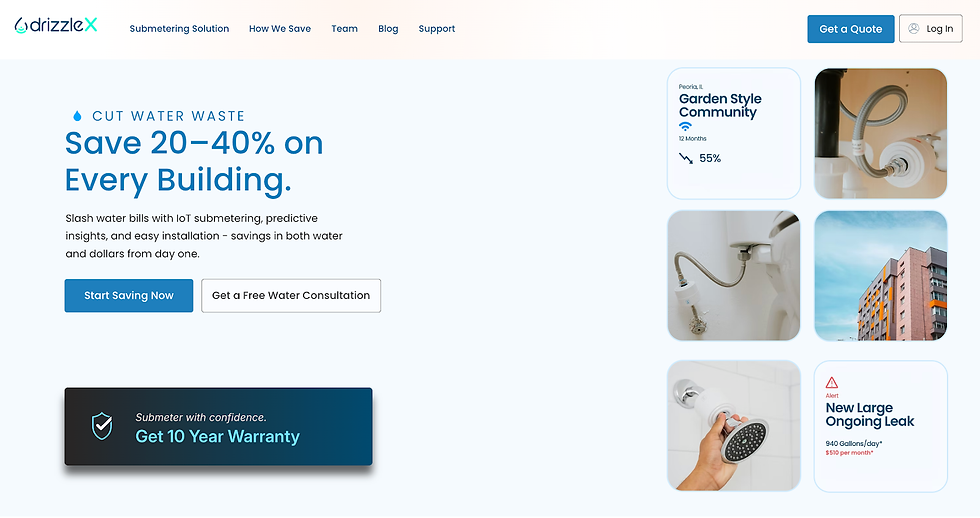
DrizzleX changes how properties manage water by measuring usage at each fixture. IoT micrometers attach to sinks, toilets, showers, bathtubs, washing machines, and equipment connections.
Installation happens without pipe cuts or service interruptions, so daily operations continue as usual.
Instead of relying on building totals, property managers see exactly where water use occurs, which improves utility operations.
Real-Time Water Usage Data and Alerts
DrizzleX records water usage as it occurs and separates hot and cold water data. Each record includes time, duration, and volume, which explains why usage changes and when it happens.
Alerts flag abnormal activity early, helping teams respond before water loss leads to higher bills or serious damage.
Leak Detection and Preventive Maintenance
Leaks often remain hidden for weeks, wasting water and increasing expenses. DrizzleX smart water meters identify running toilets and slow leaks at the fixture level.
Maintenance teams go straight to the source, which reduces repair time and delivers consistent cost savings by avoiding repeated inspections.
Accurate Tenant Billing and Conservation
DrizzleX supports billing tenants for the water they actually use. Clear usage data encourages residents to adjust habits, which helps minimize waste.
This transparency also enhances property value by promoting fairness and supporting sustainability goals related to water conservation.
AI-Powered Water Consumption Insights
DrizzleX uses artificial intelligence (AI) to analyze usage patterns and spot anomalies across units and buildings. It helps estimate occupancy trends and detect unusual behavior early.
AI water leak detection helps managers spot issues early and manage water more responsibly as part of a comprehensive utility management solution.
FAQs About Utility Management
What is the meaning of utilities management?
Utilities management refers to how organizations track, manage, and improve the use of services such as electricity, water, gas, and waste.
It helps explain where usage occurs, why costs change, and how to manage resources responsibly.
What is the role of a utility manager?
A utility manager oversees utility usage, reviews bills, and coordinates maintenance related to energy and water systems. Their work helps reduce risk by identifying issues early and supporting informed decisions.
Many utility managers rely on new technologies to monitor usage more accurately.
What are management utilities?
Management utilities are the tools used to monitor and analyze utility usage. These tools include meters, monitoring software, and reporting systems that organize usage data.
They help organizations respond faster to issues and manage resources more effectively.
What is the primary goal of utility management?
The primary goal of utility management is to manage utility usage in a way that keeps costs predictable and systems reliable.
It also helps organizations reduce waste and address challenges related to climate change.


