5 Best Water Data Management Software Solutions in 2026
Water utilities face increasing pressure to deliver safe water while meeting strict regulatory demands. Data comes from meters, sensors, lab results, and field reports, but it’s stored across separate systems.
Without reliable water data management, staff struggle to rely on usage data or prepare reports on time.
The right water data management software brings this information into one system. In this guide, you’ll see which platforms stand out in 2026.
TL;DR
These are the best water data management software solutions in 2026:
Locus Technologies
Aquatic Informatics
Qatium
Klir
What Is Water Data Management Software?
Water data management software is a digital system that collects, stores, and organizes water-related data in one place.
It pulls information from sources such as meters, sensors, lab results, and field inspections so operators can rely on consistent data.
Utilities use this type of water management software to monitor water quality, track usage, detect leaks, and review system performance.
It also helps generate reports for regulatory requirements without manual data entry.
Top 5 Water Data Management Software Tools to Consider in 2026
Water utilities have several options when it comes to water data management software. Each platform offers different strengths in reporting, monitoring, and system oversight.
Below are the water data management software tools for 2026.
1. DrizzleX
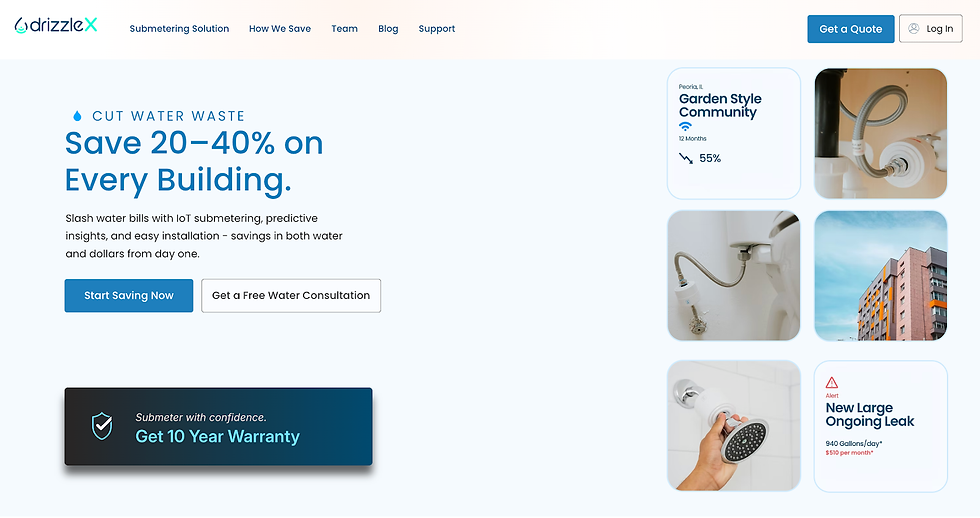
DrizzleX stands apart from other water data management software by tracking water use at the fixture level.
It measures flow rate through sinks, toilets, showers, tubs, and equipment connections rather than relying on building totals.
This ties usage to a specific unit and fixture, which helps operators identify leaks, review usage patterns, and manage water use using precise data.
Key Features
Fixture level monitoring: Uses Internet of Things (IoT) micrometers to measure water flow at individual fixtures.
Real-time flow data: Captures hot and cold water usage from sinks, toilets, showers, and equipment connections.
AI water leak detection: Identifies abnormal fixture-level flow patterns linked to running fixtures or wear.
Alerts and notifications: Flags unusual water use and identifies the exact unit and fixture.
Multi-level reporting: Displays usage at the unit, building, and portfolio levels in one platform.
Historical records: Organizes usage data by location and time period for trend analysis.
Non-invasive installation: Installs without pipe cutting or service shutdowns.
DrizzleX analyzes historical usage, occupancy indicators, and local demand trends to predict near-term water consumption at the unit and building level.
These forecasts highlight changes before they appear on monthly bills and help operators compare usage across units.
2. Locus Technologies

Image source: locustec.com
Locus Technologies is a water data management software platform used mainly for regulatory compliance and reporting.
Organizations use it to store water quality data, inspection records, and permit information across drinking water, wastewater, stormwater, and groundwater programs.
Key Features
Program coverage: Supports drinking water, wastewater, stormwater, groundwater, and industrial water systems.
Configurable workflows: Adapts forms, processes, and reports to meet regulatory requirements.
Field data capture: Collects inspection data and field measurements through mobile tools.
System integrations: Connects with supervisory control and data acquisition (SCADA) systems and other data sources.
Centralized datasets: Maintain a single record for compliance and monitoring data.
Locus Technologies is typically used in environments that manage large volumes of compliance data across multiple water programs.
3. Aquatic Informatics

Image source: aquaticinformatics.com
Aquatic Informatics is water data management software used for environmental monitoring and regulatory reporting.
Utilities and agencies use it to collect water quality data from sensors, lab samples, and field measurements. Users review, correct, and approve data values before they appear in reports.
Key Features
Centralized water quality data: Stores sensor readings, lab results, and field samples in one system.
Real-time data intake: Processes measurements as they arrive so users can review them sooner.
Data quality and calibration tools: Flags outliers, applies corrections, and records every change.
Analytics and trend review: Compares current readings to historical data to identify risk.
Maps and visualizations: Displays monitoring locations and results for faster interpretation.
Compliance reporting: Generates reports for regulators and internal and external stakeholders.
Aquatic Informatics is used mainly for environmental monitoring and regulatory reporting, not for managing distribution systems or maintenance work.
4. Qatium

Image source: qatium.com
Qatium is water data management software used to understand and manage water distribution infrastructure.
Utilities model pipes, tanks, valves, and other water assets to see how water flows through the system under different conditions.
Live data from the network feeds into the model, which helps operators review system behavior during normal operations and planned changes.
Key Features
Digital twin modeling: Represents distribution infrastructure in a live system model.
Network simulations: Evaluate shutdowns, demand shifts, and pressure changes.
Real-time data connections: Uses SCADA and automated meter infrastructure (AMI) data.
Real-time visibility: Shows pressure, flow, and tank levels across the network.
Actionable data: Flags network conditions that need operator review.
Mapping tools: Displays network status and alerts on interactive maps.
Qatium supports operational planning and monitoring through continuous insight into how water assets behave across the distribution system.
5. Klir

Image source: klir.com
Klir handles compliance work that often takes the most time inside water utilities. It organizes permits, sampling results, inspections, and limit checks so staff can see compliance status without searching across files.
Instead of reviewing results after reports are due, Klir identifies issues as soon as data enters the system.
That gives staff time to respond before violations escalate or deadlines are missed.
Key Features
Compliance records: Centralize water quality results, inspections, and maintenance history.
Alerts and trend review: Flags values near or above permit limits.
Regulatory reporting: Generates NetDMR submissions from approved datasets.
Field access: Supports inspection data entry through mobile tools.
System integrations: Connects with laboratory information management systems (LIMS), geographic information systems (GIS), SCADA, and billing platforms.
Klir centers on compliance tracking and regulatory reporting across drinking water and wastewater programs.
Comparing Water Data Management Software Options
Water data management software varies widely in what it covers.
Some platforms focus on compliance. Tools like Klir and Locus Technologies organize permits, inspections, and reporting tasks. This reduces the time spent tracking regulatory obligations.
These tools don't show how water moves through buildings or where losses occur.
Others focus on water data analytics and modeling. Aquatic Informatics and Qatium analyze water quality trends or distribution behavior.
These tools support planning and system analysis, but they rely on aggregated or modeled data rather than actual point-of-use consumption.
Implementation effort also varies. Some tools require long setup periods and ongoing configuration, which increases cost and staff workload.
The biggest difference comes down to data depth. Most platforms manage reports and models. Very few deliver actionable insights based on how water is actually used.
DrizzleX focuses on what those tools leave out.
Manage Water Use More Accurately With DrizzleX

DrizzleX applies digital transformation to water data by capturing usage at the fixture level. Flow data from sinks, toilets, showers, and equipment connections replaces estimates with measured activity.
That data supports reporting and compliance using real numbers tied to a specific location. Records reflect actual usage rather than averaged totals.
DrizzleX keeps usage data, alerts, forecasts, and historical records in one platform. Real-time insights flag leaks and overuse early. This reduces water waste and limits time spent investigating issues after bills arrive.
A DrizzleX case study from Kansas City showed a 23% reduction in water use and more than $28,000 in annual savings by tracking toilet fixtures alone.
FAQs About Water Data Management Software
Which software is used for water distribution?
Water distribution software manages how water moves through pipes, pumps, and storage systems. Operators use it to monitor flow and pressure, respond to issues, and keep service reliable.
When paired with a water data management solution, it also helps secure compliance without relying on time-consuming manual reviews.
What is a water management system?
A water management system combines software and processes to monitor water use, water quality, and system performance.
It helps organizations manage data in one place instead of relying on manual tracking.
What are the five Rs of water management?
The five Rs of water management are Reduce, Reuse, Recycle, Recharge, and Recover. They describe how water resources are conserved and managed over time.
Using data to track these efforts helps organizations ensure compliance and measure progress more accurately.


