11 Landlord Tips and Tricks for Multifamily Property Owners
On paper, owning rental property sounds simple. Rent comes in, bills get paid, and what’s left is profit. Any experienced property manager knows the rental business rarely works that smoothly.
Late payments, unexpected repairs, and rising utility bills can chip away at income faster than most owners expect. Without consistent systems, profit shrinks one decision at a time.
In this article, you’ll find essential landlord tips and tricks to help you run a more profitable rental business.
TL;DR
These landlord tips and tricks help you increase rental income and prevent avoidable losses.
Screen tenants carefully, watch red flags, and verify documents before approving applicants.
Use detailed lease agreements, enforce rules consistently, and price rent based on market data.
Conduct regular inspections, respond quickly to maintenance requests, and rely on trusted contractors.
Use technology like DrizzleX micrometers to cut utility costs and prevent leak-related damage.
1. Treat Your Rental Property Like a Business
If you want steady rental income, treat your property like a business from day one.
Keep personal and rental finances separate and document every rent payment, repair cost, and security deposit. Clean financial records make tax reporting easier and help you see where your money goes.
Review income and expenses monthly. Compare rent collection to mortgage payments, insurance, utilities, and property maintenance.
If the numbers don’t work, adjust your rent price or spending before cash flow tightens.
Put written processes in place for lease agreements, late fees, inspections, and maintenance requests.
Stay professional with tenants at all times. Consistency keeps your rental business stable.
2. Screen Tenants Thoroughly Before Signing a Lease
Tenant screening protects your income more than any other step. Start with a complete rental application and verify identity, employment, and income.
Many landlords require applicants to earn at least three times the monthly rent.
Run credit and eviction reports. Check for unpaid debts, prior evictions, and patterns of late payments.
Conduct a lawful criminal background check and confirm references with previous landlords.
According to Celeri, about 1 in 10 rental applicants submit false documents, and 50% of evictions involve tenants who were approved based on misleading information.
Review pay stubs, bank statements, and employment details carefully before approving any applicant.
3. Know the Red Flags Before Approving a Tenant
Watch for patterns that suggest future problems. Prior evictions, unpaid debts, inconsistent employment history, and bad credit often point to higher risk.
Pay attention to incomplete applications or details that don’t match supporting documents. If previous landlords hesitate or avoid direct answers, that’s a warning sign.
Choosing the right tenant protects your rental income and lowers the chance of landlord-tenant disputes, vacancy periods, and repeated turnover.
4. Draft a Lease Agreement That Protects You
Your lease agreement should answer common questions before they turn into arguments. State the lease term, monthly rent, due date, grace period, and late fees in plain language.
For example, you might write: “Rent is due on the 1st. After the 5th, a $75 late fee applies.”
Explain who handles repairs and maintenance requests. Clarify utility billing and what happens to the security deposit when a tenant moves out.
If you require renters insurance, include that requirement and specify minimum coverage.
Have a real estate attorney review the agreement so it complies with landlord-tenant laws and local regulations. A detailed lease sets expectations early and reduces misunderstandings later.
5. Enforce Rules Consistently and Professionally
A lease has value only when it’s applied consistently. If rent is past due, apply the late fee as written. If lease violations occur, address them promptly and document every step.
For example, if a tenant pays rent on the 8th and your lease states late fees apply after the 5th, follow through. Making exceptions without documentation can weaken your position later.
Follow notice-of-entry rules before entering a unit and keep records of rent receipts and communication.
When expectations remain consistent, tenants are more likely to respect the agreement.
6. Set the Right Rent Price for Your Market
Look at similar rental homes in your area that have recently leased. If comparable two-bedroom units rent for $1,800 to $1,950, pricing at $2,300 may leave your unit vacant.
Affordability trends provide helpful context. According to Zillow, the typical apartment now costs about 24% of a median-income household’s earnings.
Pricing within this reasonable percentage of local income makes approval easier for qualified tenants.
Next, compare that rent to your expenses. If your mortgage, taxes, insurance, and maintenance total $1,500 per month, pricing at $1,550 leaves little margin.
One repair or a short vacancy can quickly erase profit. Accurate pricing keeps occupancy stable and income dependable.
7. Conduct Regular Property Inspections
Regular inspections help rental property owners catch issues early. Review plumbing, roofing, HVAC systems, and electrical components at least once a year. In older rental homes, schedule two visits per year.
Follow local laws and provide proper notice before entering the unit. Use a landlord maintenance checklist and document findings with notes and photos. Detailed records help if legal issues or tenant disputes occur.
For example, spotting worn roof shingles or a slow drain early can prevent extensive property damage later. Consistent inspections keep your rental portfolio in better condition and maintain its appeal to prospective tenants.
8. Respond to Maintenance Requests Quickly
Tenants judge property management by how quickly problems are addressed. Set up a simple system for maintenance requests so residents know how to report issues.
Prioritize urgent concerns such as apartment plumbing issues, electrical hazards, or heating outages. Communicate timelines clearly and respond promptly.
Delays can lead to property damage, complaints from other tenants, and unpaid rent.
Timely repairs preserve the condition of your rental homes and help attract responsible tenants who value well-maintained properties.
9. Build Reliable Contractor Relationships
Identify dependable contractors before you need them. Ask other rental property owners for referrals and interview service providers about pricing, turnaround times, and availability.
Keep written agreements outlining payment terms and response expectations. When contractors understand your standards, scheduling becomes easier.
If you manage multiple units or a growing rental portfolio, having trusted vendors speeds up turnovers and helps prepare units quickly for new tenants.
10. Automate Rent Reminders to Improve On-Time Payments
Automated reminders help you collect rent without constant follow-up. Schedule a notice a few days before the month’s rent is due and another on the due date.
'
Most online payment platforms and tenant billing software offer this feature.
Your rental agreement should state the due date, grace period, and late fees. When reminders match what’s written in the lease, tenants know what to expect each month.
Experienced landlords rely on consistency. Routine notifications keep tenants up to date and lower the number of past due rent situations.
Instead of sending repeated personal messages, you remain professional and reinforce payment expectations each month.
11. Use Technology to Improve Property Management
Digital tools simplify rent collection and recordkeeping. Property management software organizes lease documents, maintenance history, and financial records in one system.
Online payment platforms make it easier for tenants to submit rent electronically and reduce processing delays. Automated reminders help address past due rent earlier.
Security systems can enhance property security and make units more attractive to prospective tenants.
Smart water technology like DrizzleX helps identify unusual usage patterns so you can address tenant issues sooner and manage utility expenses more effectively.
How Smart Water Tracking Cuts Utility Costs for Landlords
Water waste and billing issues quietly drain rental income. When tenants don’t pay for their own usage, consumption often climbs.
Fixture-level submetering changes how water is tracked and billed inside multifamily properties.
Track Water Usage at the Fixture Level
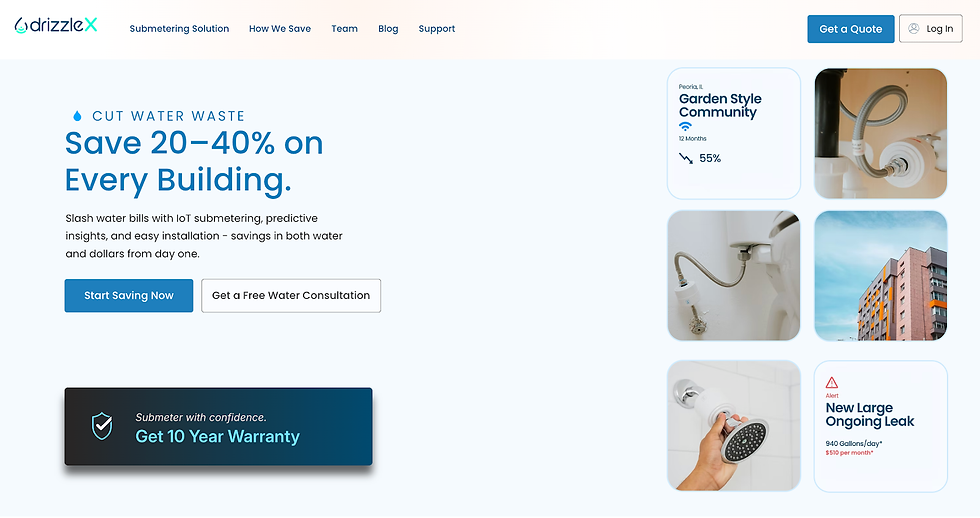
DrizzleX installs micrometers on sinks, showers, toilets, bathtubs, and hose bibs. A typical apartment includes seven micrometers, and installation takes about 15 minutes. There’s no pipe cutting and no wall removal.
Each micrometer measures water flow at the point of use and sends data to a cloud gateway. From your dashboard, you can see how much water each fixture consumes in each unit.
Detect Leaks in Real Time
Water flow is monitored continuously. When usage exceeds normal patterns, you receive an alert for potential overuse or a leak.
Early notice helps prevent damage to drywall, flooring, and a tenant’s belongings. Addressing issues sooner keeps repair costs lower and avoids escalation.
Replace Third-Party Water Billing
Many properties rely on estimated water allocation. DrizzleX records actual usage, so tenants pay for what they use.
Detailed reports reduce billing complications and improve transparency. When residents understand how charges are calculated, disagreements become less frequent.
Lower Water Bills by 20–40%
DrizzleX customers typically see water expenses decline by 20–40% after installation. The dashboard shows usage by unit and highlights unusual consumption patterns.
AI compares each unit’s water use with expected ranges based on occupancy, location, and usage trends. That insight can flag potential over-occupancy or excessive consumption.
Encourage Responsible Water Use
Most tenants underestimate how much water they use. Sharing consumption reports increases awareness and promotes conservation.
For rental property owners, that means lower utility costs and fewer disputes. It also makes the property attractive to potential tenants who value transparency and fairness.
Detect Leaks Early and Lower Repair Costs With DrizzleX
Owning rental property comes down to knowing your numbers. Screening tenants carefully, enforcing your lease, pricing rent correctly, and staying on top of maintenance all help keep income steady.
The landlords who perform best rely on accurate data. When you can see where money goes each month, you make better decisions about pricing, repairs, and property improvements.
Water is often one of the least visible expenses in multifamily housing. DrizzleX brings that expense into view.
Fixture-level monitoring, leak alerts, and usage-based billing give you accurate insight into consumption inside every unit.
For first-time landlords and experienced portfolio owners, this isn’t an add-on. It’s the infrastructure that helps your property stand out and attract quality tenants.
FAQs About Tips and Tricks for Landlords
What are common landlord mistakes?
Common landlord mistakes include weak tenant screening, poor documentation, and delayed maintenance.
Some landlords also fail to require tenants to obtain renters' insurance, which can lead to debates over damaged belongings. Disorganized records can also create problems for tax purposes.
What is the 50% rule in rental property?
The 50% rule estimates that operating expenses will consume about 50% of a property’s gross rental income, excluding the mortgage.
If rent is $2,000 per month, roughly $1,000 may go toward expenses like taxes, insurance, maintenance, and utilities.
What are red flags for landlords?
Red flags include prior evictions, unpaid debts, inconsistent employment, and incomplete rental applications. Income documents that don’t match stated information also warrant concern.
Careful screening helps prevent missed rent and legal disputes.


