What Is Smart Water Technology? A Better Way to Manage Water
Updated: Dec 26, 2025
Water systems face aging pipes, rising costs, and growing pressure to use water fairly. Smart water technology tracks how water moves through buildings and networks and detects leaks and waste the moment they appear.
Sensors and data tools support smart water management and help property owners, utilities, and communities secure safe and affordable access to water.
In this guide, you’ll learn what smart water technology is, how it works, and what you can gain from using it.
TL;DR
Smart water technology relies on connected devices and software to observe how water behaves during everyday use across systems and buildings.
Continuous monitoring replaces delayed readings, which helps surface leaks, misuse, and equipment issues much earlier.
Water system visibility helps organizations limit water loss, manage power use, and maintain stable service.
Utilities, property owners, engineers, manufacturers, and residents all benefit from knowing how water is actually used.
DrizzleX applies smart water technology at individual fixtures, revealing water activity inside buildings that traditional systems never capture.
What Is Smart Water Technology?
Smart water technology uses sensors, smart meters, and data analytics to track water flow, pressure, and quality in real time.
These tools detect leaks, monitor water consumption, and reveal problems in water systems before they spread.
Smart water systems use the Internet of Things (IoT) and advanced metering infrastructure to collect data across pipes and treatment plants.
Water utilities and property owners use this data to reduce non-revenue water, improve operational performance, and manage water use more responsibly.
The technology also helps cities respond to water scarcity, climate change, and ageing infrastructure with more reliable information.
How Smart Water Systems Work
Smart water systems use digital tools that record what happens inside pipes, fixtures, and treatment equipment.
These systems gather real-time data across a water network and create a continuous log that operators can study.
Sensors and Smart Meters Capture System Activity
Sensors measure flow rate, water pressure, and temperature, many times each day. Smart water meters store this data and detect water flow patterns that may point to leaks or unusual usage.
These readings show how much water enters or leaves a specific line. They also help operators confirm whether water usage matches expected behavior.
Digital Technology Connects Devices Across the Network
Smart technologies use wireless communication to send data from sensors and meters to a secure platform.
Real-time monitoring systems gather updates from treatment plants, pump stations, and main distribution lines.
Remote monitoring tools organize this information and display it in a cloud-based dashboard. Utility teams use this dashboard to review system performance from one place.
Data Analysis Turns Raw Data Into Actionable Insight
Machine learning and big data analytics study flow data, pressure changes, and water quality readings. Modeling tools identify early signs of wear in pumps or pipes.
Machine learning algorithms can also predict when maintenance will help prevent service interruptions. These predictions help operators plan work before a problem affects more users.
Smart Water Solutions Improve Daily Operations
Smart water solutions help the water industry reduce water waste and manage energy consumption. Utility teams use these tools to plan predictive maintenance and adjust pumping schedules.
They also track water quality improvements through accurate data. Smart cities rely on these systems to protect public health and maintain steady access to water resources.
Why Smart Water Technology Matters
Smart water technology matters for many regions that face tight supply, aging pipes, and higher water demand.
These points introduce the pressures that influence water management in cities and communities.
Aging infrastructure: Pipes weaken as they age and release treated water into the ground. This creates non-revenue water that never reaches homes or buildings. Utility companies must repair these lines to keep critical infrastructure stable and safe.
Water scarcity: Long dry seasons reduce access to natural resources. Growing populations add more water demand during these periods. Smart solutions gather granular data that helps teams plan proper water management and encourage water efficiency across different regions.
Climate conditions and equipment wear: Dry stretches and strong storms place strain on pumps, valves, and treatment units. Real-time monitoring systems spot early signs of wear so crews fix equipment before failures spread through water distribution systems.
Digital modernization: Cities upgrade water infrastructure through smart water projects. Cloud computing platforms organize data collected from sensors and meters. Teams use this insight to refine energy management plans and achieve environmental sustainability goals.
Smart water technology helps the water sector manage a scarce resource through more efficient technology use.
What Problems Can Smart Water Technology Solve?
Smart water technology helps surface problems that routine inspections and monthly reports rarely catch.
When those issues go unnoticed, costs increase, and treated water never reaches the people who need it.
Earlier sections showed how smart water systems reduce water waste and energy use across networks.
In the Cleantech space, this benefit appears most clearly in leak prevention and pumping control. Small leaks inside walls or underground can run for months without detection.
Flow sensors catch subtle changes and show where water escapes, which reduces unnecessary treatment and pumping.
Aging distribution lines add another source of loss. Worn joints release treated water into the surrounding soil before it reaches customers.
Leak detection technology measures this loss and helps utilities focus repairs on recovering existing supply rather than expanding production.
Smart water technology also improves daily operations inside buildings. In Proptech, limited visibility into water system behavior often leads to inefficient pump schedules.
Once system activity becomes measurable, operators adjust runtimes and reduce the energy used to move water.
Who Benefits From Smart Water Technologies?
Smart water technologies help many groups that depend on steady and accurate water service. Here’s how each group uses the data in everyday decisions.
Water utilities: Utilities need accurate data to keep service consistent. Smart systems show where water loss occurs and help operators adjust pump cycles to reduce power use.
Engineers: Engineers rely on real field measurements when they design or improve water systems. Sensor data helps them test layouts and confirm that each section can handle actual pressure and flow conditions.
Manufacturers: Manufacturers want to understand how their products perform after installation. Detailed usage patterns help them refine designs and create solutions that hold up under daily use.
Vulnerable communities: Some neighborhoods deal with hidden leaks or quality issues that raise monthly bills. Early leak detection helps operators fix these issues before they place added costs on residents.
Smart water technologies provide each group with practical insight that improves water management.
Challenges of Smart Water Technology
Smart water technology delivers value, but it also brings challenges. Data acquisition is usually the first issue people run into.
Sensors and meters may come from different vendors and use different formats. When systems don’t align, operators struggle to connect readings across locations.
Network security also deserves attention. Water infrastructure counts as critical infrastructure, which makes access control a priority.
Without proper safeguards, unauthorized access can interfere with operations or expose sensitive data.
Upfront investment is another factor. Hardware, software, and installation require upfront spending.
Many organizations roll out smart tools in phases so they can improve efficient water management while staying within budget.
These challenges don’t block adoption, but they do require practical planning from the start.
How DrizzleX Applies Smart Water Technology Inside Buildings
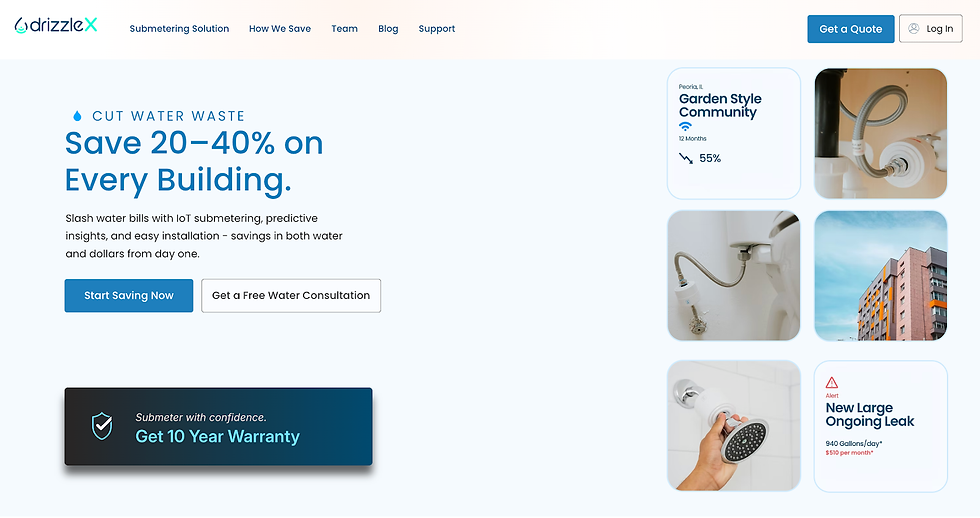
Smart water programs often stop at the main meter, which leaves many building-level problems unresolved.
DrizzleX extends monitoring to the fixtures themselves, where leaks, abnormal use, and billing issues usually start.
Fixture Level Monitoring and AI-Driven Leak Detection
DrizzleX places micrometers on sinks, showers, toilets, and appliances to measure water use at each fixture.
A typical one-bedroom unit uses approximately 7 micrometers, and installation typically takes under 15 minutes.
The smart water monitoring system works with older plumbing and riser layouts, so it fits both newer properties and buildings with aging infrastructure.
AI compares fixture-level data against established usage patterns. It flags running toilets, dripping faucets, nighttime spikes, and water use in vacant units.
These signals often surface well before damage or billing complaints appear.
Real Time Alerts and Operational Insight
When unusual activity shows up, DrizzleX sends an email alert that identifies the unit, the fixture, and the estimated water loss.
Maintenance staff go directly to the source instead of checking entire floors or stacks. Residents receive usage reports that reflect their own consumption, which often reduces disputes and improves awareness.
Patterns that repeat over time point to worn components or equipment room issues. This improves operational efficiency and helps properties schedule repairs earlier.
Many buildings report 20-40% lower water bills and recover system costs in about nine months.
Portfolio Level Data and Management Systems
DrizzleX aggregates fixture-level data across properties into centralized management systems. Cities can use this data to study consumption trends.
Researchers analyze water data in occupied buildings. Manufacturers review post-installation behavior to refine products and develop innovative solutions.
Buildings generate water use records, and DrizzleX converts that data into actionable insights that improve daily operations.
FAQs About Smart Water Technology
What are smart water technologies?
Smart water technologies use sensors, meters, and software to monitor water use and system conditions. They track flow, pressure, and consumption in near real time.
This data helps identify leaks, abnormal use, and equipment issues earlier than traditional methods.
What's so special about smart water technologies?
Smart water technologies show what’s happening inside a system as water is being used. Instead of relying on monthly readings, operators see patterns form throughout the day.
This makes it easier to catch problems early and manage water use more accurately.
What are the disadvantages of a smart water meter?
Smart water meters require upfront costs for equipment and installation. They also depend on reliable connectivity to transmit data.


