Multifamily Property Software: What You Need to Know
Multifamily property software helps landlords and property managers stay organized. Some focus on rent collection and lease tracking, while others handle maintenance requests and utility billing.
Instead of relying on spreadsheets and paperwork, you have reliable software that assists you in handling important tasks.
This post explains what multifamily property management software is, how it helps property managers, and the problems different software types solve.
TL;DR
Multifamily property software centralizes rent, maintenance, accounting, utilities, and resident communication.
Different software types support property management, leasing, accounting, automation, and utility billing.
These tools replace manual work with online payments, work orders, reports, and resident portals.
Utility billing software charges tenants based on usage instead of shared estimates.
DrizzleX fits within multifamily property software by tracking water use and supporting accurate utility billing.
Why Property Managers Use Multifamily Property Software
Managing rental properties takes a lot of work. You have to track rent, handle repairs, and respond to tenant requests.
If you also bill for utilities, it gets even harder. That’s why many property managers use the right software to keep things simple.
Makes Rent Collection Easier
Chasing late rent takes time. With multifamily property management software, tenants pay rent online through secure portals, and the system sends payment reminders automatically.
Payments post to rent rolls and sync with property accounting records, which helps maintain accurate financials.
Some systems deposit funds directly into bank accounts, which shortens the time between payment and receipt.
Simplifies Maintenance Requests
Tenants report problems online instead of calling or sending texts. They attach photos and notes, which show what needs repair before a technician arrives.
Work order management tools assign tasks to on-site teams and track each repair from start to finish.
Mobile access lets staff update work orders while on the property, so issues don’t get overlooked or repeated.
Helps With Accounting
Tracking income and expenses takes time, especially during tax season.
Multifamily property software records income and expenses by unit and property in one system.
Financial reporting tools generate detailed reports that show balances and totals without manual checks.
Some platforms also connect with tools like QuickBooks. This helps property owners review portfolio performance across properties.
Saves Time With a Simple Setup
Nobody wants to waste hours learning new software. A well-built system feels easy to use and works on both computers and phones. Property teams manage properties from any location.
An intuitive interface helps leasing staff handle routine tasks such as rent posting, resident updates, and lease records from a cloud-based platform.
Teams work within one system during daily operations. This setup cuts repetitive tasks and leaves more time for higher-value work.
Makes Utility Billing Fair With Submetering
If tenants pay for utilities, a utility submetering system charges each unit based on actual usage instead of splitting costs evenly.
Shared billing often leads to uneven charges and landlord-tenant disputes.
Submetering systems track water and energy use by unit, so residents pay for what they use. Property owners manage utility expenses more accurately and see lower utility costs.
Different Types of Multifamily Property Software
Multifamily property software comes in different types. Here are the main types, along with an example of software for each category:
Property Management Software
This is the most common management software for multifamily used by landlords and property managers.
It covers the core tasks that come up every day, including:
Rent collection – Tenants pay rent online, and the system records payments automatically in rent rolls.
Lease tracking – The software tracks lease start dates, renewals, expirations, and lease signing timelines.
Maintenance management – Tenants submit requests online, and managers assign work orders to on-site teams.
Tenant communication – The system sends notices and reminders for rent, lease renewals, and maintenance updates through resident portals or email.
Buildium is one example of property management software that combines rent collection, maintenance tracking, and lease records in one platform.
Utility Billing and Submetering Software
Properties that bill tenants separately for utilities such as water, gas, or electricity often use utility billing and submetering software.
The software records usage by unit and creates bills based on that data. This type of software usually includes:
Submetering integration – Tracks each unit’s water usage to promote fair billing for tenants.
Automated bill generation – Calculates utility costs and sends bills directly to tenants.
Online payments – Let tenants pay utility bills through the same online portals they use for rent.
DrizzleX tracks water usage in multifamily properties through smart meters installed at the unit level. The system records usage throughout the month and flags unusual patterns such as leaks or constant flow.
Property managers review unit-level reports and bill residents based on recorded usage, which helps avoid unexpected utility costs.
Accounting and Financial Management Software
Property management involves constant money tracking. Rent payments, vendor invoices, maintenance costs, and utility charges all affect daily finances.
Accounting and financial management software keeps these records in one unified system. Property management companies use it to avoid manual processes and inconsistent records.
This type of software typically helps with:
Expense tracking – Logs maintenance, repairs, and operational costs.
Financial reporting – Generates profit and loss reports, tax documents, and budget forecasts.
Bank reconciliation – Syncs with bank accounts to match payments and deposits.
Integration with property tools – Connects with rent collection and billing tools to keep financial data consistent.
Accounting software helps property owners and real estate professionals review financial performance across their properties.
QuickBooks is one example of software used to track rental income, manage expenses, and prepare reports for budgeting and tax filing.
Tenant Portal and Communication Software
Tenant portals and communication software give residents one place to handle common requests and messages.
Property teams use online portals to manage resident communications across apartment buildings.
High-quality communication software includes:
Online messaging – Tenants and property managers can chat through a secure portal.
Community updates – Sends announcements about events, maintenance schedules, and emergencies.
Document storage – Store lease agreements, payment records, and policies in the resident portal.
Self-service tools – Residents submit maintenance requests, make digital payments, and update contact details without calling the office.
Tenant portals help property teams manage resident communications across apartment buildings as the number of residents grows.
TenantCloud provides an easy-to-use portal where tenants can make payments, submit maintenance requests, and receive important updates.
Smart Home and Building Automation Software
Smart home and building automation software helps property teams manage building systems without constant site visits.
These tools support multifamily operations by monitoring access, energy use, and water activity across apartment buildings.
Common features include:
Access control – Keyless entry replaces physical keys and logs access by unit or shared space.
Energy efficiency – Smart thermostats and lighting systems adjust settings remotely and reduce utility waste.
Security monitoring – Cameras and alerts notify on-site teams of unusual activity in common areas.
Leak detection – Sensors identify leaks early and send alerts before water damage spreads.
Automation software helps property managers oversee more residents as portfolio size grows. Early alerts limit damage, reduce manual checks, and protect the resident experience.
SmartRent offers keyless entry, smart thermostats, and security monitoring to help property managers enhance tenant safety.
Marketing and Lead Management Software
Marketing and lead management software helps leasing staff track interest in open units and manage applications.
This type of software typically covers:
Listing distribution – Posts available units to multiple rental sites at once, so staff don’t update listings manually.
Online applications – Collects applications through a single form and stores applicant details in one system.
Resident screening – Screens tenants using credit, background, and rental history checks. Some tools also include ID verification to confirm applicant identity.
Lead tracking – Records inquiries, application status, and follow-ups, so leasing staff know who applied and who still needs a response.
These leasing tools help property managers keep up with applications as a multifamily portfolio grows.
Zillow Rental Manager posts listings to multiple platforms and collects online applications in one place. It screens applicants and tracks rental leads, so leasing staff can review and respond without using multiple tools.
How DrizzleX Supports Water Monitoring in Multifamily Properties
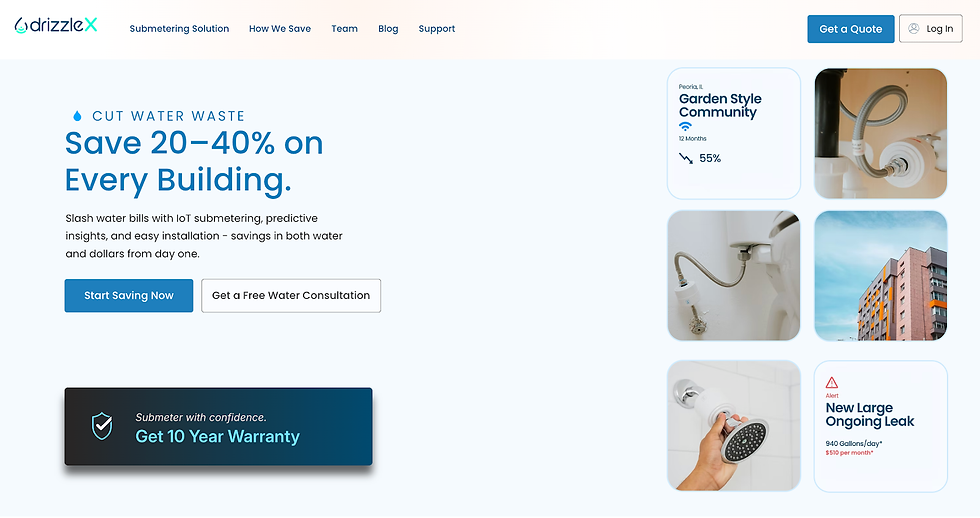
DrizzleX tracks water use at the unit and fixture level in multifamily properties. It detects leaks, records usage, and supports accurate utility billing.
The system uses fixture-level micrometers installed on sinks, toilets, showers, and appliances. These micrometers measure water flow and send data to a building gateway.
The gateway sends the data to the DrizzleX cloud for reporting and alerts.
Properties using DrizzleX often reduce water bills by 20–40%. Savings come from faster leak detection and usage-based billing.
This also applies to market-rate properties and portfolios with affordable housing capabilities.
See Water Usage by Unit and Fixture
DrizzleX includes a Water Consumption Insights Report that shows water use by unit and by fixture.
Property managers see which fixtures drive higher usage and which units need attention.
Clear usage data helps explain charges to residents. Fewer questions and accurate billing help keep residents happy, especially in buildings that previously used shared utility estimates.
Find and Fix Leaks Before Costs Add Up
Some leaks stay hidden for months. Running toilets and slow drips often go unnoticed until bills spike. DrizzleX tracks water flow in near real time and flags unusual patterns.
When the system detects a leak, it identifies the unit and fixture involved. It also estimates how much water is lost and what it may cost. This helps teams act before damage or high bills follow.
Get Real-Time Alerts
DrizzleX sends email alerts when irregular water use appears. Each alert includes the unit, fixture location, gallons used, and estimated cost.
These alerts reduce reliance on tenant reports. Maintenance teams respond faster and avoid repeat service calls tied to the same issue.
Bill Tenants Fairly
DrizzleX replaces shared billing with actual usage data. Tenants pay for what they use instead of building-wide averages.
That cuts down on billing arguments and repeated questions about charges. It also lines up with how other resident charges work, like utilities or renters insurance, where each person pays their own share.
Compatible With Multifamily Buildings
DrizzleX installs at the fixture level and takes about 15 minutes per unit. No pipes are cut, and walls stay intact. Most properties don’t need a full water shutdown during installation.
The system works with riser plumbing and other layouts where traditional submetering doesn’t apply.
Battery-powered micrometers last up to ten years and send data continuously to the platform.
FAQs About Multifamily Property Software
What is multifamily software?
Multifamily software is property management software for apartment buildings with multiple units. It handles rent, maintenance requests, tenant screening, accounting, and resident services within a unified platform.
What software do landlords use?
Landlords use different software based on portfolio size and property type. Smaller portfolios may use basic tools for rent and maintenance.
Mixed portfolios often need a flexible property management platform that covers leasing, accounting, and inspections. The right software helps simplify operations as properties change.
What is the best software to keep track of rental properties?
The best software depends on daily responsibilities and portfolio size. Some property managers focus on rent, maintenance, and accounting. Others need tools for leasing, screening, or utilities.
Platforms such as Buildium and MRI Software cover different parts of property management, so the right choice depends on which tasks you handle most often.


