Multi-Tenant Submetering: How It Works and Why It Matters
Shared utility bills frustrate property owners and tenants. Charges often rely on estimates, which leaves everyone questioning fairness and usage.
Multi-tenant submetering offers a better answer. It records water and energy use per unit, so tenants pay for what they use.
In this article, you'll learn how this system works and why it counts for multi-tenant properties. We’ll explain how precise energy usage data changes tenant behavior and spending.
TL;DR
Multi-tenant submetering measures actual water and energy use per unit for fair billing.
Estimated utility billing hides waste and overcharges low-use tenants.
Submetering improves tenant accountability and reduces energy and water consumption.
Unit-level data helps property owners manage utilities and plan costs more effectively.
DrizzleX adds fixture-level monitoring to catch leaks early and reduce water waste.
What Can Submetering Do for Multi-Tenant Properties?
Submetering lets you bill tenants based on actual energy and water usage. Each unit’s consumption gets measured separately, so tenants pay for what they use rather than a shared average.
For multi-tenant property owners, this reduces utility costs and landlord-tenant disputes.
When people see their own usage, they use fewer resources. That often leads to lower energy consumption across the entire property.
Submetering also works well in buildings with mixed tenants. An office, retail space, or energy-intensive tenant won’t use utilities the same way. Submetering accounts for those differences without relying on square-foot calculations.
Why Estimated Utility Billing Leads to Higher Energy Costs
Traditional utility billing relies on one meter for the entire property. Costs then get split using estimates, often based on square footage or headcount.
That method rarely reflects how tenants actually use water, electricity, or natural gas.
In multi-tenant environments, usage varies widely. One tenant may run energy-intensive equipment, while another uses very little. When both pay similar amounts, low-use tenants feel overcharged, and high-use tenants have no reason to change behavior.
This system also hides waste. Leaks, equipment left running, and spikes in energy consumption blend into the total bill.
Without unit-level data, property managers can’t identify where utility costs come from or which tenant contributes most to them.
How Submetering Solves Common Utility Billing Problems
Once fairness and usage accuracy come into focus, property owners often notice other issues tied to how utilities are managed. Submetering helps address those operational problems.
Here’s what submetering improves behind the scenes:
Energy monitoring across building systems: Submetering systems show how electricity and thermal energy are used across units. Property managers can track loads and spot unusual demand patterns early.
Better planning for energy prices: Unit-level water data analysis helps building owners anticipate usage trends. This makes it easier to plan budgets when energy prices change.
Compatibility with older buildings: Many buildings rely on outdated systems. Electric submeters and high-accuracy current sensors work with existing infrastructure and avoid costly rewiring.
Billing records and compliance: Detailed usage records help explain charges and answer tenant questions. They also help meet local billing rules.
Submetering reduces surprise utility expenses. Fewer unknowns mean fewer billing issues and more consistent oversight across the property.
Hidden Costs of Water Use in Multi-Tenant Buildings
Water waste is one of the hardest utility expenses to spot in multi-tenant buildings. Unlike electricity, water issues rarely trigger alerts.
A running toilet or slow leak can add thousands of gallons to a bill without anyone noticing.
These hidden losses increase operational costs, especially in office buildings and residential properties with many individual tenants.
When water use isn’t tracked at the unit level, responsibility stays unclear, and waste continues.
Common examples include toilets that refill nonstop, faucets that drip for weeks, or fixtures left on after hours. Each issue seems minor on its own, but together they add steady pressure to utility budgets.
Water submetering brings those patterns into focus. Tracking usage per unit makes waste easier to spot and address.
That insight often leads to quick savings without major installation changes, which makes water submetering a cost-effective upgrade for many properties.
Benefits of Multi-Tenant Submetering Systems
Tenant submetering systems are beneficial for property owners and tenants. When utilities get measured at the unit level, billing, planning, and tenant behavior all improve.
Higher Tenant Satisfaction Through Fair Billing
Tenant satisfaction links closely to how costs are handled.
A study published in The Journal of Real Estate Finance and Economics found that a one-point increase in tenant satisfaction increased the likelihood of lease renewal by 8.6% and decreased the likelihood of moving out by 23.1%.
The study also connected higher satisfaction to rent growth and lower vacancy rates.
Submetering helps reach that outcome by charging tenants based on actual energy usage. When bills match usage, tenants understand their charges and trust the process.
Tenant Accountability Improves Energy Efficiency
Submetering solutions show tenants how much water or energy their unit uses. That awareness often leads to better habits, such as fixing running fixtures or reducing unnecessary use during peak hours.

In buildings using submeters like the ones from DrizzleX, a 65-unit property in Los Angeles, CA saw a 38% reduction in water use over eight months.
Average daily consumption per tenant fell from 144 gallons to 90 gallons, resulting in $65,797 in total savings.
Better Energy Management for Changing Properties
Submetering systems support stronger energy management across multi-tenant buildings. Unit-level data helps property managers track usage patterns and plan upgrades without major system changes.
Installing meters that work with existing infrastructure keeps upgrades manageable. As tenant spaces change, submetering continues to deliver useful data without reworking the entire system.
Upgrade Multi-Tenant Submetering Using DrizzleX
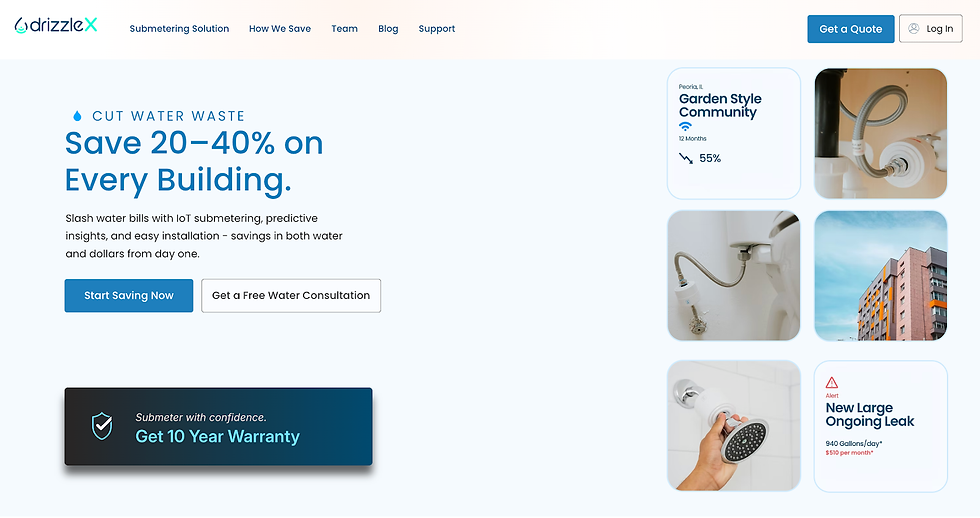
Most submetering systems stop at unit totals. DrizzleX extends the submetering project by showing how water gets used inside each unit, which helps property owners manage utilities with more precision.
Track Water Use at the Fixture Level
DrizzleX uses micrometers installed at individual fixtures such as toilets, sinks, and showers. Each micrometer records water flow at the source.
When combined, they create accurate unit-level data without altering existing plumbing.
This method works well in buildings without unit meters. The system integrates with existing infrastructure and avoids invasive work, which keeps installation simple.
Catch Leaks Early With Automated Alerts
Water issues often stay unnoticed between inspections. DrizzleX monitors flow patterns and flags problems linked to toilet leaks or dripping faucets.
When unusual use appears, the system sends an email with fixture details, gallons wasted, estimated costs, and likely causes.
These alerts help property managers respond quickly to fixture problems.
Use Reports That Lead to Action
DrizzleX offers Water Consumption Insights Reports that highlight unusual or excessive water use. The reports help property managers talk with tenants using facts instead of assumptions.
DrizzleX supports a wide array of building types and integrates easily with existing services. It’s a future-proof way to manage water data and reduce waste.
FAQs About Multi-Tenant Submetering
Is submetering illegal?
Submetering is legal in most states and municipalities, but rules vary by location. Some areas require specific disclosures, billing practices, or tenant notifications.
Always review local utility regulations and landlord-tenant laws before installing a water submeter.
What are the disadvantages of submetering?
Submetering can involve upfront installation costs and requires ongoing system monitoring. In older buildings, placement options may be limited, which can affect how meters are installed.
Clear communication with tenants is also important to avoid confusion during the transition.
Is submetering worth the cost?
Many multi-tenant properties see payback through reduced utility use and improved billing recovery.
When tenants pay based on their own consumption, usage often drops. Those savings can offset installation costs within months.
What is the difference between a direct meter and a submeter?
Utility providers own and manage direct meters that serve individual units. Submeters sit downstream from the main meter and record usage for each unit within a shared system.
This setup allows accurate tenant billing without changing the primary utility connection.


