How Does Submetering Work and Is It Worth It?
Most multi-unit buildings still split utility bills using estimates. Tenants question the fairness, and owners can’t see where usage comes from. Submetering changes how utilities get measured and billed.
So, how does submetering work? Instead of one meter for the entire building, submeters record usage for each unit, tenant, or system. That difference resolves billing disputes.
This guide explains how submetering works, what it tracks, and when it's suitable for your property.
TL;DR
Submetering measures utility usage per unit.
Submeters replace estimates with recorded electricity, water, or gas consumption.
Property owners use submeter data to reduce disputes and uncover waste.
Modern submetering installs faster and requires less upkeep than older systems.
DrizzleX takes submetering further with fixture-level water tracking that lowers bills.
What Is Submetering?
Submetering is the practice of installing individual meters after a building’s main utility meter to measure electricity, water, or gas use for each unit, tenant, or specific area.
The main meter records total usage for the entire property. Submeters record usage inside apartments, offices, or other defined spaces. Each reading reflects what that unit uses during a billing period.
In multifamily buildings and commercial properties, submetering replaces shared estimates with unit-level measurements. Those measurements are the basis for tenant utility bills.
How Does Submetering Work in a Building?
Submetering measures utility use at specific points inside a building and converts those readings into tenant-level charges.
Here’s how it works:
Install meters at specific locations: Submeters get installed in individual units, on select floors, or on major systems such as HVAC equipment and shared lighting. Each meter measures electricity, water, or gas for that location.
Record usage during the billing period: Each meter captures consumption over time. The readings reflect actual electricity and water use.
Review usage data: Property managers examine the readings to identify units or systems with unusually high consumption or continuous water flow.
Calculate charges from meter readings: Tenant bills rely on submeter data, which assigns costs based on measured usage.
This process replaces estimates with recorded consumption that owners use for billing and review.
What Utilities Can Be Submetered?
Different utilities require different types of submeters. Each one helps building owners understand where utility costs come from across a property.
Below are the most common utilities that property owners choose to submeter.
Electricity Submetering
Electricity submetering tracks electricity consumption for individual units, floors, or major equipment. This data shows how energy usage varies across a building rather than assuming equal use.
Property managers often review these readings to understand how lighting systems and HVAC systems contribute to overall energy costs.
Uneven electricity consumption can also point to wiring issues or equipment that draws more power than expected.
Water Submetering
Water submetering records water usage at the unit or fixture level. This makes it easier to see which apartments or spaces use the most water during a billing period.
Continuous or elevated flow often signals leaks. Identifying those patterns helps reduce water waste and prevent higher utility charges in multifamily properties, rental properties, and mobile home parks.
Gas Submetering
Gas submetering measures fuel use in gas-powered systems such as heating equipment, commercial kitchens, and industrial processes.
These readings help building owners identify systems that consume more gas than expected and take action before fuel costs escalate.
Property Types That Use Submeters
Submetering gets adopted when shared utility billing creates problems that owners and residents can’t resolve with a single meter.
The reasons vary by property type, but each group uses submetering to solve a specific operational issue.
Multifamily Properties and Apartment Buildings
In multifamily properties, utility use can vary widely from unit to unit. Without unit-level data, owners face disputes over charges, and tenants question fairness.
Multifamily water submetering assigns costs based on individual usage, which leads to fewer billing complaints.
Property management teams also review unit data to spot unusually high energy consumption or steady water use that may signal leaks.
Commercial Properties and Office Buildings
Commercial spaces rarely operate the same way. Some tenants run long hours or use power-heavy equipment, while others don’t.
Submetering lets building owners allocate costs based on actual usage instead of shared averages.
This keeps tenants responsible for their own consumption and prevents one space from inflating building-wide utility charges.
Industrial and Specialized Facilities
Industrial facilities rely on submetering to track resource usage across machines, production areas, and support systems.
Submeters highlight equipment that consumes more electricity or gas than expected.
Maintenance teams use that information to address wear, calibration issues, or process problems before energy costs climb.
Homeowners Associations and Mobile Home Parks
Homeowners' associations and mobile home parks often rely on a single meter for all residents. That setup leads to disagreements over shared charges.
Submetering assigns utility costs to each household and gives residents access to their own usage records. This reduces landlord-tenant disputes and helps maintain property value.
Benefits of Submetering for Property Owners and Tenants
After installation, submetering changes how utility use gets reviewed across a building.
Property owners and property management teams gain detailed information about electricity, water, and gas use across units and systems.
That information helps with budgeting, maintenance planning, and utility oversight.
Submeter data also exposes issues that don’t appear on a single bill. Examples include equipment that draws more electricity than expected, uneven usage across individual floors, or steady water flow that points to leaks.
Addressing these issues reduces energy waste and leads to ongoing savings.
Utility expenses also become easier to anticipate. When charges reflect recorded usage, owners can forecast expenses more accurately and maintain stable net operating income.
How Submetering Handles Installation and Maintenance Issues
Older submetering systems often required major electrical or plumbing work. Modern utility submetering systems avoid that.
Smart meters and sensors are installed with limited changes, which reduces upfront expense and limits disruption across the building.
Maintenance demands also drop. Automated data collection replaces manual reads, and regular calibration keeps meters accurate over time. This lowers the risk of billing errors caused by drift or missed readings.
Modern platforms also centralize utility billing. Charges get calculated from recorded usage without manual processing, which simplifies cost allocation and reduces administrative workload.
When submetering regulations apply, standardized usage records help properties meet reporting requirements and keep utility records consistent.
These upgrades make it easier to apply submetering to high-waste areas like water.
Lower Water Costs With Fixture-Level Submetering From DrizzleX
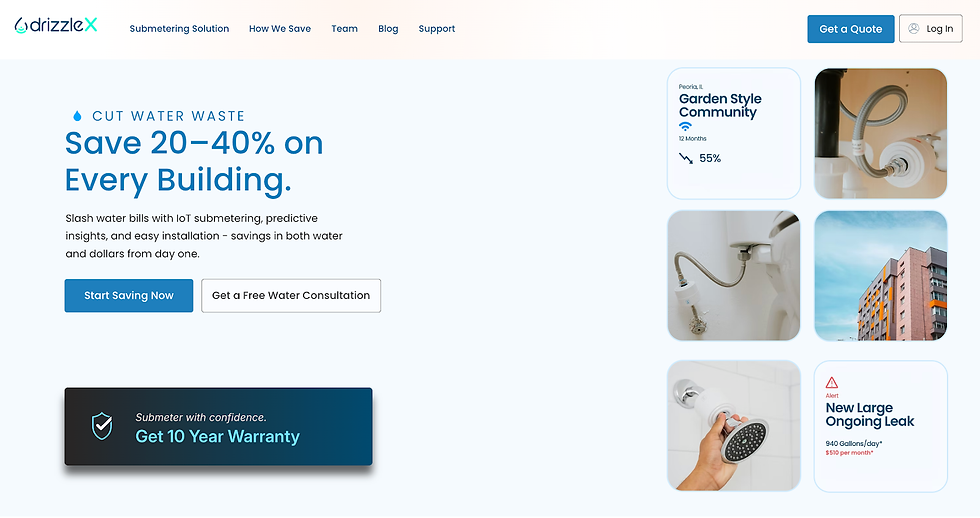
DrizzleX uses fixture-level water submetering to show how water gets used inside each unit.
Toilets, showers, and sinks get measured individually, which gives building management teams usable data across the whole building.
Fixture-Level Tracking That Finds Problems Early
DrizzleX relies on real-time monitoring to track water flow at each fixture. A running toilet or slow leak appears in the data as it happens.
The smart water monitoring system sends an email with the unit, fixture, gallons used, and estimated cost.
This level of detail helps property owners identify inefficiencies and cut costs without asking tenants to change their habits.
Billing Tenants on Actual Water Use
Fixture-level data supports fair billing. Tenants get billed based on recorded water use instead of averages.
Usage records show how charges were calculated, which reinforces tenant protections and reduces billing disputes.
Proven Results With Fast Payback

At a 57-unit property in Peoria, Illinois, daily water use dropped from over 20,000 gallons to under 7,000 after installation.
Monthly water costs fell from $81 per unit to $27. Over one year, the property saved $37,525. Most buildings recover the full system cost in about nine months.
Fixture-level submetering gives property teams precise water data analysis to catch leaks early and resolve billing issues.
FAQs About How Submetering Works
How does electrical submetering work?
Electrical submetering uses separate meters installed after the main electric meter. Each submeter tracks how much electricity a unit, tenant, or system uses during the billing period.
What are the disadvantages of submetering?
Submetering requires upfront installation costs and ongoing meter maintenance. Older buildings may need electrical upgrades before meters can be installed.
Property teams also need a process to review data and handle tenant billing questions.
How accurate are submeters?
Most modern submeters provide highly accurate readings when installed correctly and calibrated on a regular schedule.
Accuracy depends on meter quality, proper installation, and consistent data collection. Well-maintained systems deliver reliable usage data over time.
Is submetering worth the cost?
Submetering often pays off when shared billing leads to disputes or high utility expenses. Many properties see lower bills and faster problem detection after installation.
In many cases, the system recovers its cost within months.


